Family-run • Southampton & HampshireA personal approach. From the first idea to the finishing touch.07368 230191
Stone patio beside a brick house, with steps down to a lawn and a slatted timber fence
GB Home & Garden Services

Landscaping in Bitterne.

More practical use of your garden through thoughtful routes, levels and defined spaces.

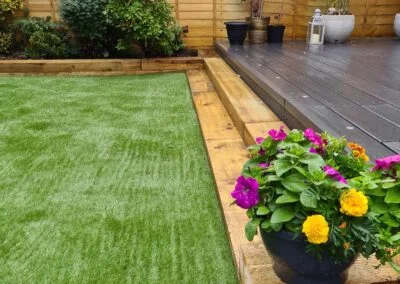
Fresh lawn edged by timber and flower planting

Describe where the layout gets in the way

For landscaping in Bitterne, identify the places that interrupt everyday use: a difficult step, a narrow passage beside furniture or a lawn route that becomes inconvenient. These observations establish the problem without assuming a particular solution.

A site discussion can consider the available dimensions and how changes would meet the house, boundaries and retained features. Photographs from both ends of the garden help explain the connections.

Give access the same attention as appearance

Mention whether materials can enter from the side or need another route, and describe any height changes along the way. Construction access affects how work can be organised and what requires protection.

If you have a budget in mind, explain the priorities within it rather than assuming every desired feature must be included. The scope can then be discussed in terms of the improvements that will be most useful.

Use levels to organise, not obstruct

A change in height can define a sitting area or separate uses, but it also affects movement. The layout should consider the route people need before selecting raised features. Existing differences in level require assessment so the finished arrangement is based on the property rather than a copied design image.

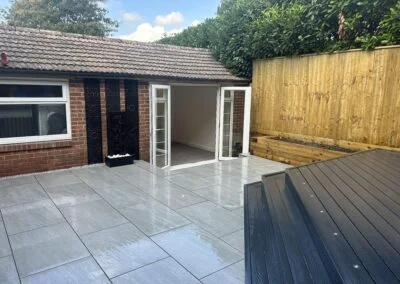
Patio and decking beside an outdoor room

Choose surfaces for the route they serve

Regular access to a gate or storage may call for a different finish from an area mainly viewed from the house. Consider cleaning, wear and the connection to doors. Several surface types can work together, but each additional junction needs deliberate detailing and enough room to be useful.

Compare ground work separately from visual extras

A quotation may include significant removal, level adjustment or supporting construction before the visible finish. Keep these requirements clear when prioritising the budget. Optional decorative features can be reviewed without assuming essential preparation is optional. After completion, the care routine should reflect each installed material and any newly established lawn.

Your project, in detail

Treat changes in level as part of the whole route

For landscaping in Bitterne, describe where movement becomes awkward: a step immediately outside a door, a sloping path or a raised section separating the house from the lawn. The useful question is how the entire journey should work. Improving one transition can still leave a difficult route if its next section remains narrow, uneven or obstructed.

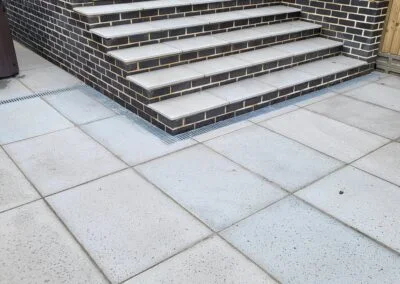
Wide paved steps between garden levels

Record the existing heights and constraints for assessment rather than assuming that removing a step is a small surface change. Ground support, drainage and the relationship to retained structures can affect the proposal.

Where specialist design is needed, resolve it before selecting the decorative finish. Include how the work will be reached, what stays in use and how adjoining ground will be restored in the quotation.

Landscaping · Bitterne FAQs

Your questions.
Practical answers.

Ask about your project ↗
Should I mention difficulty using existing steps when requesting landscaping?

Yes. Explain what makes the route difficult and who needs to use it, without sending private medical details. Dimensions and levels must be assessed before a suitable alteration can be proposed; a photograph alone cannot establish the correct solution.

Can landscaping make a difficult route more straightforward?

Improving a difficult route starts with the task and the intended user: reaching a seat, moving a bin or taking a mobility aid through a gate. Assess widths, gradients, levels and the connections at both ends before choosing a surface. Where specialist advice is needed, include it in the design. A smooth-looking material cannot compensate for an unsuitable overall arrangement, and suitability cannot be established from a photograph alone.

Are raised beds always easier to maintain?

They can change access to planting, but position, reach and surrounding routes still matter. They also introduce constructed edges and possible ground-retaining requirements. Consider the complete arrangement rather than assuming height alone makes every task easier.

Why might a small level change affect the scope?

Its connection to doors, paths and retained ground can require additional design or construction. The extent is established through assessment. A limited visible difference should not be used to assume the supporting work is equally minor.

What information helps if a household member finds the garden difficult to use?

Explain the task and the obstruction in practical terms: carrying items through a gate, using a mobility aid, reaching a seat or negotiating a height change. Share the relevant dimensions and how the route is used. A suitable solution needs to be assessed for that person and property; choosing a product described as accessible does not, by itself, make the complete arrangement suitable.

Let’s get started

Discuss landscaping in Bitterne

Contact Gregg about more practical use of your garden through thoughtful routes, levels and defined spaces.

Call 07368 230191Get a free quote ↗