Route lighting
Seeing paths, thresholds and steps.
What to consider
Position, glare and outdoor suitability.


Bring pathways, planting and seating areas into the evening with considered outdoor lighting and heating. We help Southampton and Hampshire homeowners plan these features as part of a comfortable, practical outdoor space.
A welcoming evening garden does not need every corner brightly lit. We start with how you use the space: the path to the gate, steps by the house, a dining area or a feature you would like to see after dark. The position and direction of lighting matter as much as the fitting. Heating choices also need to suit the seating arrangement, exposure and available space rather than being added as an afterthought.
Seeing paths, thresholds and steps.
Position, glare and outdoor suitability.
Highlighting a wall or seating arrangement.
Viewing direction, brightness and nearby windows.
Comfort in a specific seating area.
Equipment type, manufacturer clearances and surrounding materials.
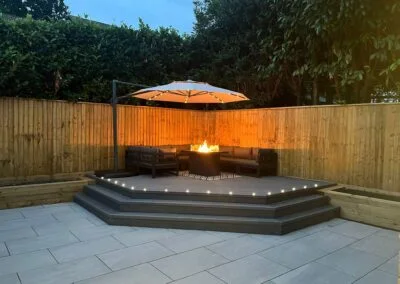
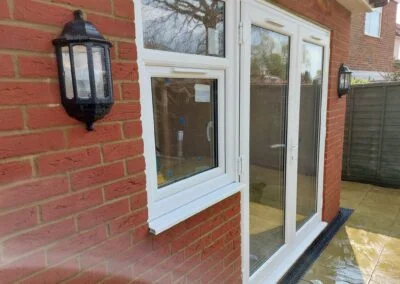
Make the journey to a seating area easier to see and bring attention to the details you love. We discuss fitting positions, controls and any heating you want around your outdoor seating. Electrical design, equipment suitability, installation and testing need to be agreed with the appropriate installer as part of the scope.
Browse the full work galleryLighting is easier to integrate when cable routes and controls are considered alongside the landscaping. If you are installing a patio, decking or a garden room, bring the lighting brief into the early conversation. Existing services need assessment; electrical work should be undertaken by suitably qualified people with any required certification agreed as part of the scope.
Bright fittings aimed towards neighbouring windows can make an otherwise pleasant scheme intrusive. We discuss where light is needed, where it should stop and how the area will be controlled. A smaller number of well-positioned fittings may be more effective than lighting every boundary. Consider the view from inside the house as well as the experience of sitting outside.
Open patios and more sheltered seating areas behave differently. Heater type, mounting position, running arrangements and clearances must match the chosen product and setting. Do not assume that any heater can go under a pergola or beside planting. We can discuss the outdoor layout and identify the product and specialist checks needed before installation.
Lighting a route to a gate serves a different purpose from highlighting a tree or creating an atmosphere around a dining table. Establish those jobs individually before choosing fittings.
A route may need to be usable when the seating area is switched off, while a feature light should not create glare when viewed from indoors. Thinking in terms of use helps keep the scheme proportionate and makes the controls easier to discuss.
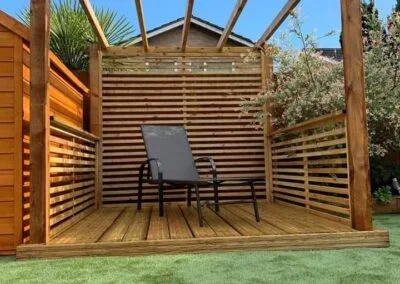
Adding lighting after landscaping is complete requires care over access and installation routes. Existing paving, decking and planting may affect where services can run and what would need disturbing. We discuss the desired result alongside those constraints.
Where you are planning a new surface anyway, it may be more practical to coordinate the work. The electrical assessment should establish what can safely be retained and what additional provision the proposed fittings require.
The position of chairs and tables, the exposure of the space and the height or location of a proposed heater all affect the brief. Heating equipment has specific installation and clearance requirements that must be followed.
A covered area does not automatically make every product suitable, and adding heat does not remove the effects of weather. Discuss the complete setting and the selected equipment rather than treating a heater as a universal way to extend outdoor use.
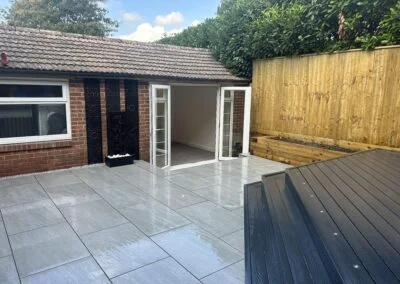
Consider who will use the lighting and how easily the controls can be reached. It should be practical to switch off unused areas and access fittings for cleaning or maintenance.
Plant growth can also change how a feature light performs over time. We help coordinate the garden layout with these requirements, while suitably qualified professionals address electrical installation, testing and any certification within the agreed scope.
Think through outdoor comfort, electrical routes and how the space will be used.
Ask about your project ↗Raise lighting when the layout is being planned, with the routes and areas you intend to use after dark. Decide where practical visibility is needed and which features are decorative. That gives the responsible electrical installer a brief for positions, switching and suitable routes before paving or decking closes access. Confirm who supplies, installs and tests the equipment; a landscaping allowance alone is not a completed electrical design.
We can assess the layout and discuss suitable lighting or heating options. Existing surfaces, access and services will affect what is practical.
The project scope should identify the suitably qualified electrical professional and any required testing or certification. Agree who will undertake the electrical design, installation and testing before the work is booked. Ask that installer for the documentation appropriate to the completed work.
It can improve comfort in suitable conditions, but performance depends on weather, exposure, the layout and the selected product. It is not a guarantee of comfortable use in every season.
Yes. A limited number of carefully considered light sources can focus on useful routes or selected features. The position, direction and brightness should be discussed together, including the view from the house and neighbouring properties.
Dimmers, timers, sensors or separate switching may suit different uses, but the selected fittings and control system must be compatible. Explain whether you want brief access lighting, evening seating light or independent zones. Ask the responsible installer to specify the arrangement and demonstrate it at handover. Keep product details and instructions, including how to operate the system if an app or network connection is unavailable.
Their condition, suitability and compatibility need assessment. Do not assume that an outdoor-looking fitting or existing cable is suitable for a revised layout. Reuse should be agreed following the appropriate checks.
Lighting routes should be considered before finishing new decking or a paved terrace. For a constructed seating space, see our garden building service.
Tell us which routes, seating areas or features matter most. We can discuss lighting and heating as part of a practical outdoor layout, with the necessary specialist checks identified.