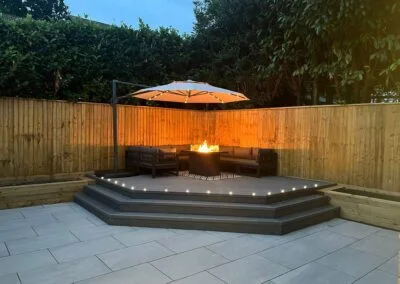
Can lighting highlight planting without lighting the whole garden equally?
That effect can be discussed. Identify the features you want to emphasise and where practical visibility is still needed. Direction, product choice and controls require assessment, and the arrangement should also consider views from the house and nearby properties.
Can growing plants change a lighting effect?
Growing vegetation can obstruct beams, change shadows or make fittings and connections difficult to reach. Consider mature planting as well as the view immediately after installation. Discuss maintenance access and whether aiming or output can be adjusted within the selected system’s instructions. The electrical equipment still needs a suitable installation; it should not depend on improvised repositioning as the garden changes.
Should decorative lights run whenever route lights are needed?
Not necessarily. Separate operation can be discussed with the intended routines and appropriate electrical design.
Can a fitting be hidden where it cannot be reached?
Maintenance and inspection access still matter. Concealment should not be the only criterion for selecting its position.
Should garden lights stay on throughout the night?
Consider whether there is a practical need for each light to operate for that long. Controls can limit operation to the times the area is used, while careful positioning can reduce unnecessary spill. Discuss the setting and any relevant local restrictions with the responsible adviser. A lighting plan should address neighbours and the surrounding environment as well as the view from your own seat.