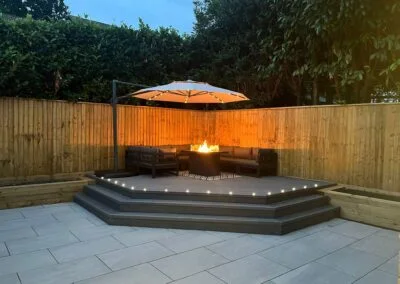
Can lights be positioned to reduce glare from the seating area?
That is a useful aim to discuss. Show the normal viewing positions and the features to illuminate. Direction, shielding and product choice need assessment in context; the solution should be considered with the electrical design and surrounding property rather than promised from a photograph.
Can light direction matter more than the fitting’s size?
Yes. A product’s appearance does not describe its effect from the seating position. Assess the intended illumination in context.
Can a heater be assessed from a generic example photograph?
A generic photograph shows a preferred appearance, not a heater’s installation requirements. Provide the exact model information and show the proposed location, surrounding materials and any cover. Clearances, ventilation, mounting and supply must be assessed for that equipment. Establish suitability before purchase and keep the manufacturer’s instructions. Equipment that works in one photographed setting should not be assumed safe or effective in another arrangement.
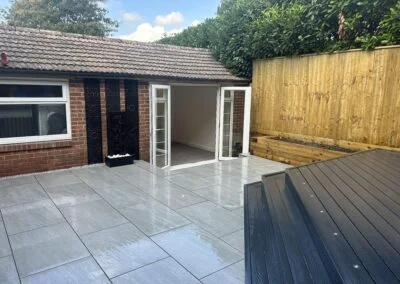
Can lighting be added during a patio project?
Raise it while the layout is being planned. Cable routes and fitting positions may need to be coordinated before the paving is completed.
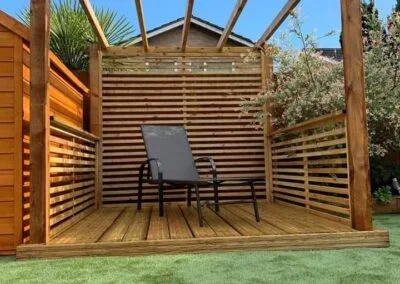
Can a heater be installed beneath a covered area?
Suitability depends on the specific product, clearances and construction around it. The manufacturer’s instructions and appropriate assessment must guide the decision.
What can reduce unwanted light beyond the terrace?
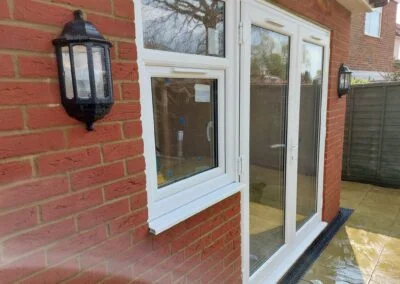
Position, aiming, output and operating times all deserve attention. Explain the nearby windows and spaces you want to avoid illuminating, then discuss suitable fittings and controls with the installer. Review the effect after dark where this is part of the agreed commissioning. Do not rely on a daylight product photograph to show the beam or assume that a brighter model can be corrected simply by pointing it elsewhere.